Facebook
 X
X
 Pinterest
 Copy Link
When people talk about buying a house or investing in rental property, almost all the focus goes straight to mortgage interest rates. If you live or invest in North Dakota, another monthly line item quietly dictates actual monthly holding costs: municipal budget negotiations, mill levy adjustments, and annual property tax statements.
Recent regional budget meetings show the financial realities local governments face. In East Grand Forks, city leadership recently presented preliminary budget options with property tax levy increases reaching up to 10% to balance rising personnel costs, insurance premiums, and capital upkeep. You can review the details through KNOX News Radio’s coverage of the East Grand Forks budget.
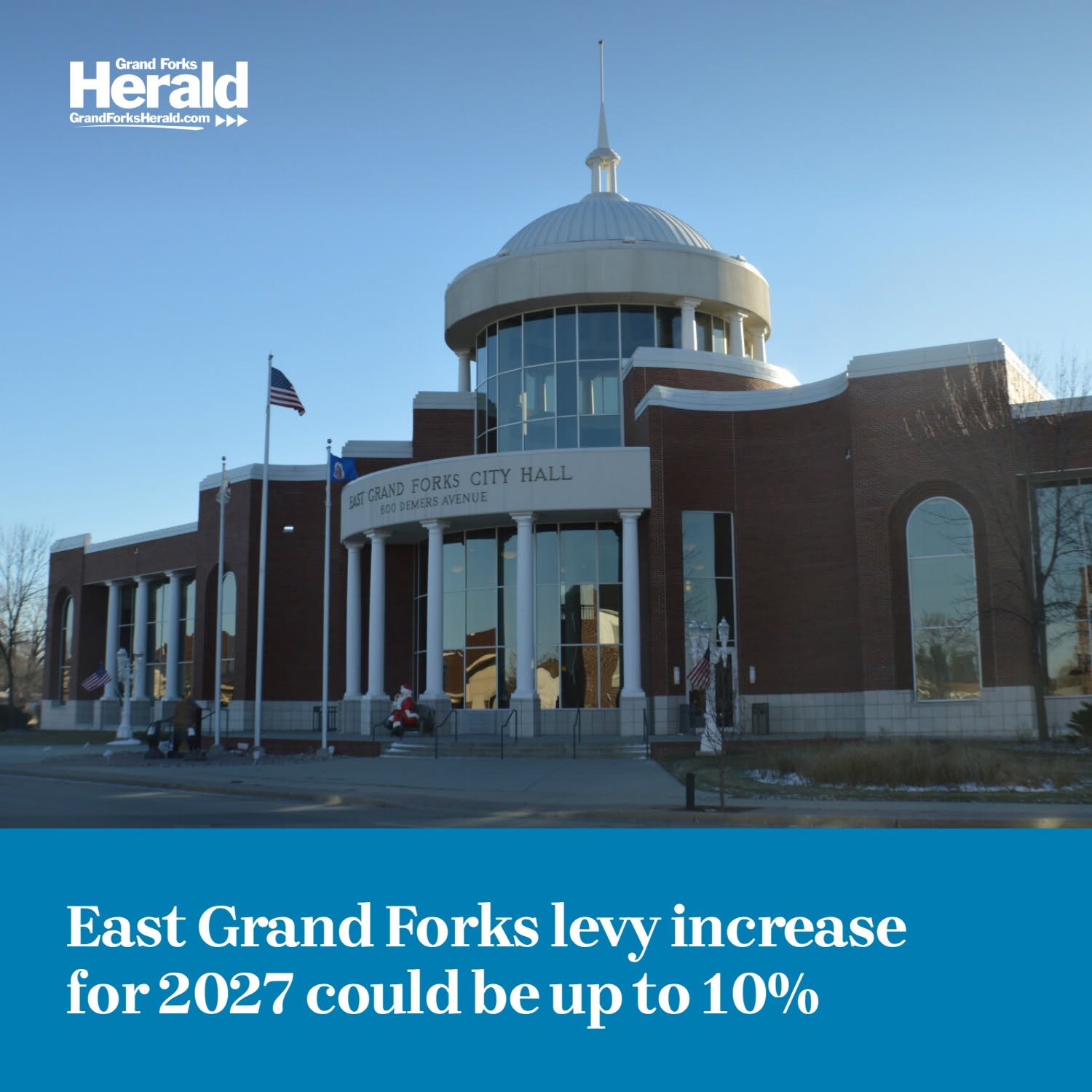
When municipal operating budgets grow, that expense flows directly to property tax bills. The following sections examine how those numbers affect borrowing power, tenant turnover, and rental cash flows.
What Local Budget Pressures Look Like on the Ground
Cities across the Upper Midwest manage rising non-discretionary costs. The recent East Grand Forks 2027 budget presentations illustrate the core drivers behind property tax increases:
- Rising Personnel & Benefit Costs: Municipal staff, police, and emergency services face higher living expenses. The preliminary budget accounts for a 4% cost of living adjustment alongside scheduled step increases, which push personnel expenses to $9.7 million. Added to that is a 15% spike in employee health insurance costs.
- Deferred Infrastructure & Facilities: The city must fund building upkeep, including a $1.2 million renovation for Fire Station No. 2. The general fund cannot finance this project from existing revenue streams alone without depleting reserves.
- Balancing the Ledger: Operating expenditures are projected to reach $13.9 million (a $550,000 increase over the prior year). Among the modeled scenarios (3%, 5%, 8%, and 10%), only the full 10% levy creates a balanced budget with a modest $25,800 buffer, avoiding withdrawals from the city’s $7.3 million cash reserve.
Preliminary tax levies must be approved by September 30, with final binding budgets adopted by December 28. These decisions establish the actual tax assessments homeowners and landlords pay throughout the following year.
PITI Mechanics and Buyer Purchasing Power
Mortgage lenders do not qualify buyers solely on home sale prices. Approvals rely on Debt to Income (DTI) calculations based on the total PITI payment: Principal, Interest, Taxes, and Insurance.
When property taxes rise, your monthly escrow payment climbs along with them:
- Borrowing Power Compression: In an interest rate environment around 6.5% to 7.0%, every $100 per month increase in property taxes reduces a buyer’s maximum mortgage borrowing capacity by roughly $14,000 to $16,000.
- Loan Approval Thresholds: Lenders adhere to strict qualifying guidelines, including debt limits established under the Consumer Financial Protection Bureau Mortgage Underwriting Standards. If a buyer is close to the standard 36% to 43% total debt threshold, an extra $80 to $120 added to monthly escrow can push the loan file into denial, forcing the buyer toward smaller homes or alternative neighborhoods.
Real Estate Investor Impact: Zero Relief & Cap Rate Compression
While owner occupants can access state level tax relief, residential landlords and real estate investors operate under different financial rules:
- No State Tax Credits for Rentals: North Dakota provides an annual
Primary Residence Credit worth up to $1,600 under North Dakota Ce
ntury Code § 57-02-08.9. This credit applies strictly to owner occupied primary residences. Duplexes not occupied by the owner, single family rentals, multi-family apartment complexes, and commercial properties receive zero state credit relief.
- Direct NOI Reduction: Property taxes represent a non-controllable Operating Expense (OpEx). A $1,200 annual tax increase on a multi-family unit reduces Net Operating Income (NOI) by $1,200 dollar for dollar. At a 7% capitalization rate, that single expense change wipes roughly $17,000 off the property’s asset valuation unless rents rise proportionally.
- Lease Pass-Through Friction: Raising tenant renewal rates by $75 to $150 per month to cover property taxes and utility hikes increases friction during lease turn seasons. When market rent ceilings are pushed too aggressively, it elevates vacancy lengths and bad debt exposure.
Cross-River Dynamics: Grand Forks (ND) vs. East Grand Forks (MN)
The Greater Grand Forks area offers a clear example of how differing tax structures influence neighborhood demand:
- Holding Cost Comparisons: When East Grand Forks considers tax increases up to 10%, buyers compare long term holding costs across the river in Grand Forks, North Dakota.
- State Credit Value: North Dakota owner occupants can apply for the state’s $1,600 Primary Residence Credit through the North Dakota Office of State Tax Commissioner and access financing via the North Dakota Housing Finance Agency. These programs lower monthly carrying costs relative to border markets without equivalent state funded homeowner credits.
Don’t Overlook Special Assessments
In North Dakota, standard county and city mill levies are only part of the real estate expense equation. Cities regularly fund local capital infrastructure by levying Special Assessments (“Specials”) directly against individual parcels under North Dakota Century Code Chapter 40-22.
- How Specials Work: When a municipality paves new streets, installs water lines, or builds storm retention ponds, it divides that debt among the benefiting property owners.
- Impact on Monthly Payments: An unassessed balance or active 20-year special assessment bond can add $150 to $400+ per month directly to a property’s annual tax statement.
- The Closing Review: Prior to signing purchase agreements, buyers and investors should check with the local city auditor for the remaining balance, annual payoff schedule, and any pending infrastructure projects scheduled for assessment.
Strategic Checklist for Buyers and Property Managers
- Underwrite Real Mill Rates: Do not rely on outdated tax figures on marketing pro-formas. Contact the local county tax director to calculate holding costs using current property assessments and pending municipal levy adjustments.
- File for State Homeowner Credits: If you purchase a primary home in North Dakota, complete the Primary Residence Credit Application during the annual filing window (January 1 to April 1).
- Include Escalation Terms in Leases: For commercial leases and multi-family assets, use property tax escalation language to protect net cash flow as local mill rates change over multi-year terms.
- Review County Valuations: Check your annual property assessment statement delivered each spring. If the local assessor’s true and full valuation exceeds recent comparable sales, file a timely property assessment appeal with your local Board of Equalization.
For a direct look at how city councils evaluate these proposals, review the East Grand Forks City Council Work Session Recording, which shows city staff and council members working through preliminary budget models and levy allocations.